Author Archives: Jack Rawlins

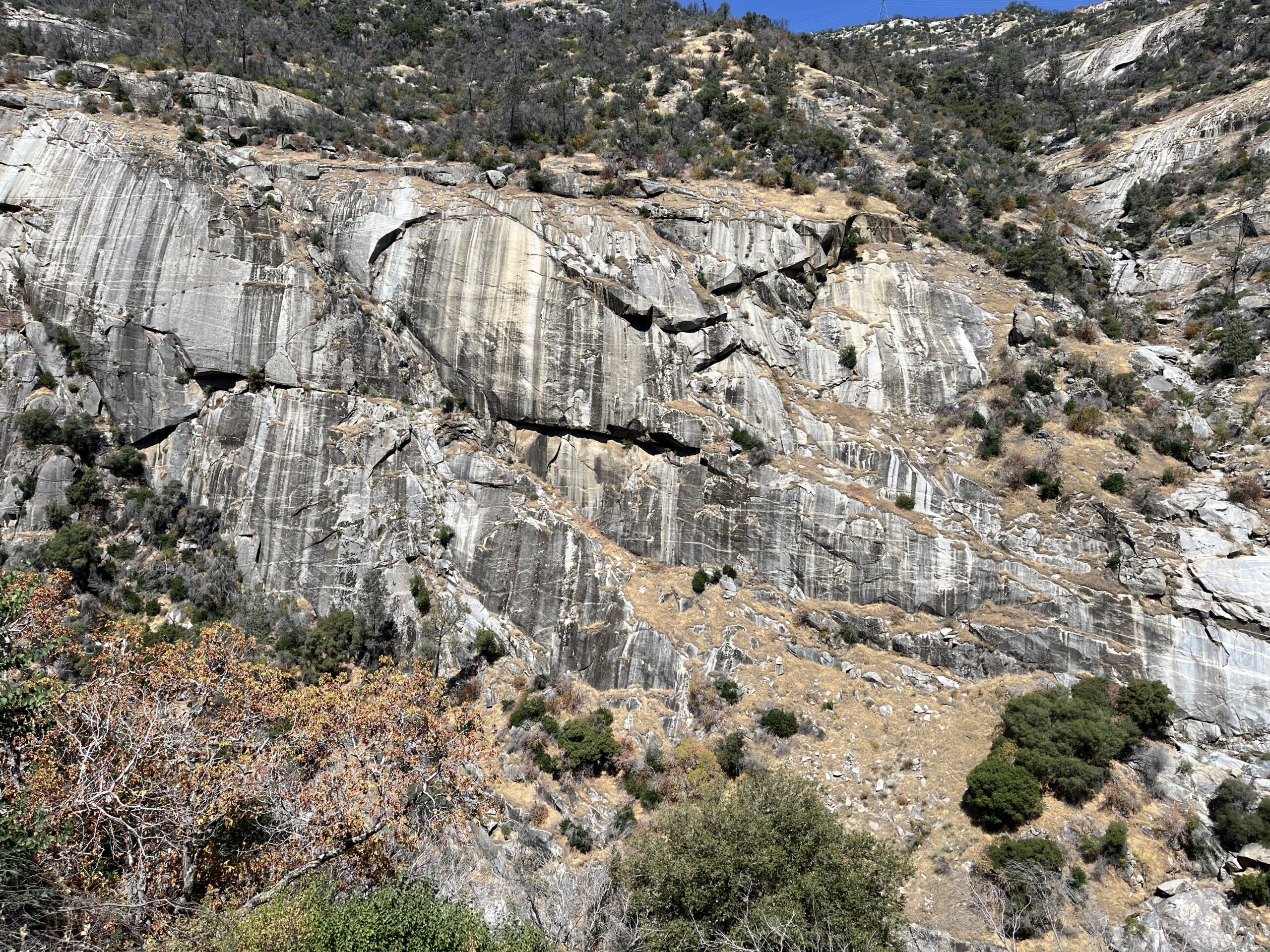
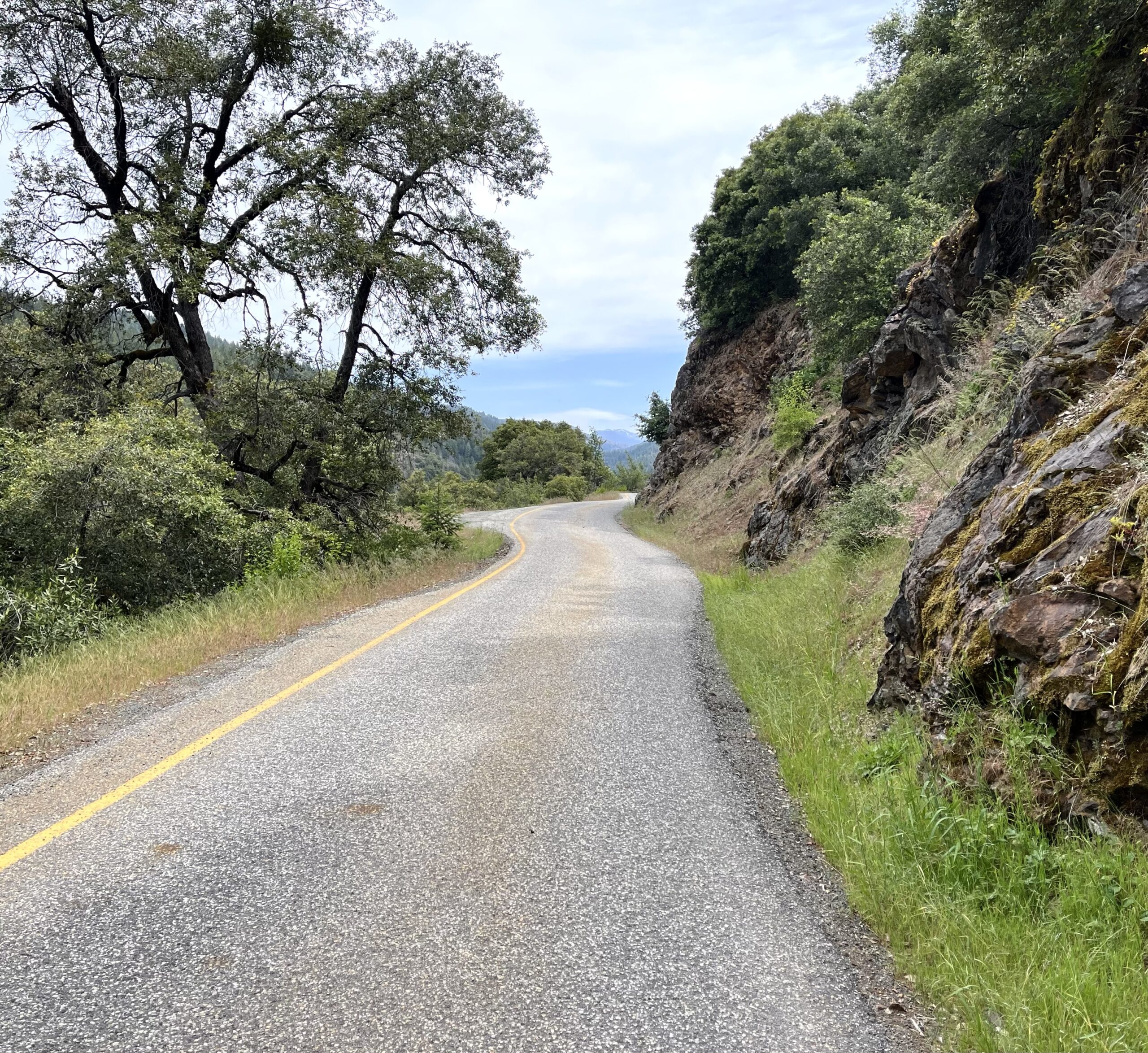
Whiskey Slide Road

Distance: 17.2-mile out-and-back with spur
Elevation gain: 2000 ft

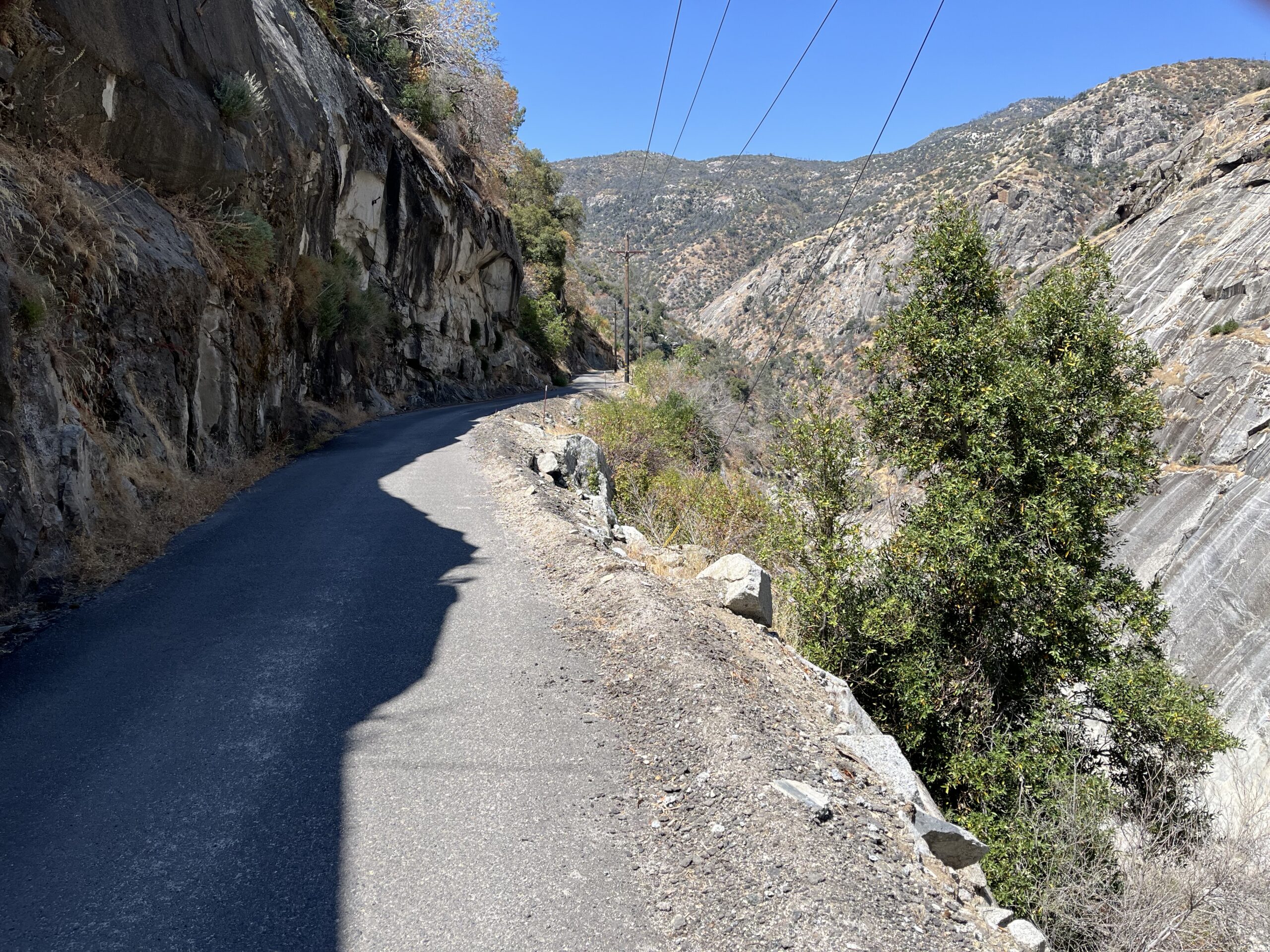
All roads in the southern Gold Country, other than Hwy 49, are worth riding. They’re all relatively small, with great scenery and intriguing, ever-changing contour. Some are more worth riding than others. Some have rough pavement. Some have traffic. Some are dirt. I’m always on the look-out for those tiny back roads that have none of these flaws—like this little jewel. It’s a cut-off between two roads users of Bestrides know well, Jesus Maria Rd. and Mountain Ranch Rd, and it’s 6+ miles of one-lane, glassy-surfaced, isolated, riotous up and down. It’s short, but you’ll get some work (check that elevation gain), it can be incorporated into longer rides effortlessly (see Adding Miles below), and there’s a side road, East Murray Creek Rd., that adds a few miles and is just as delightful riding.

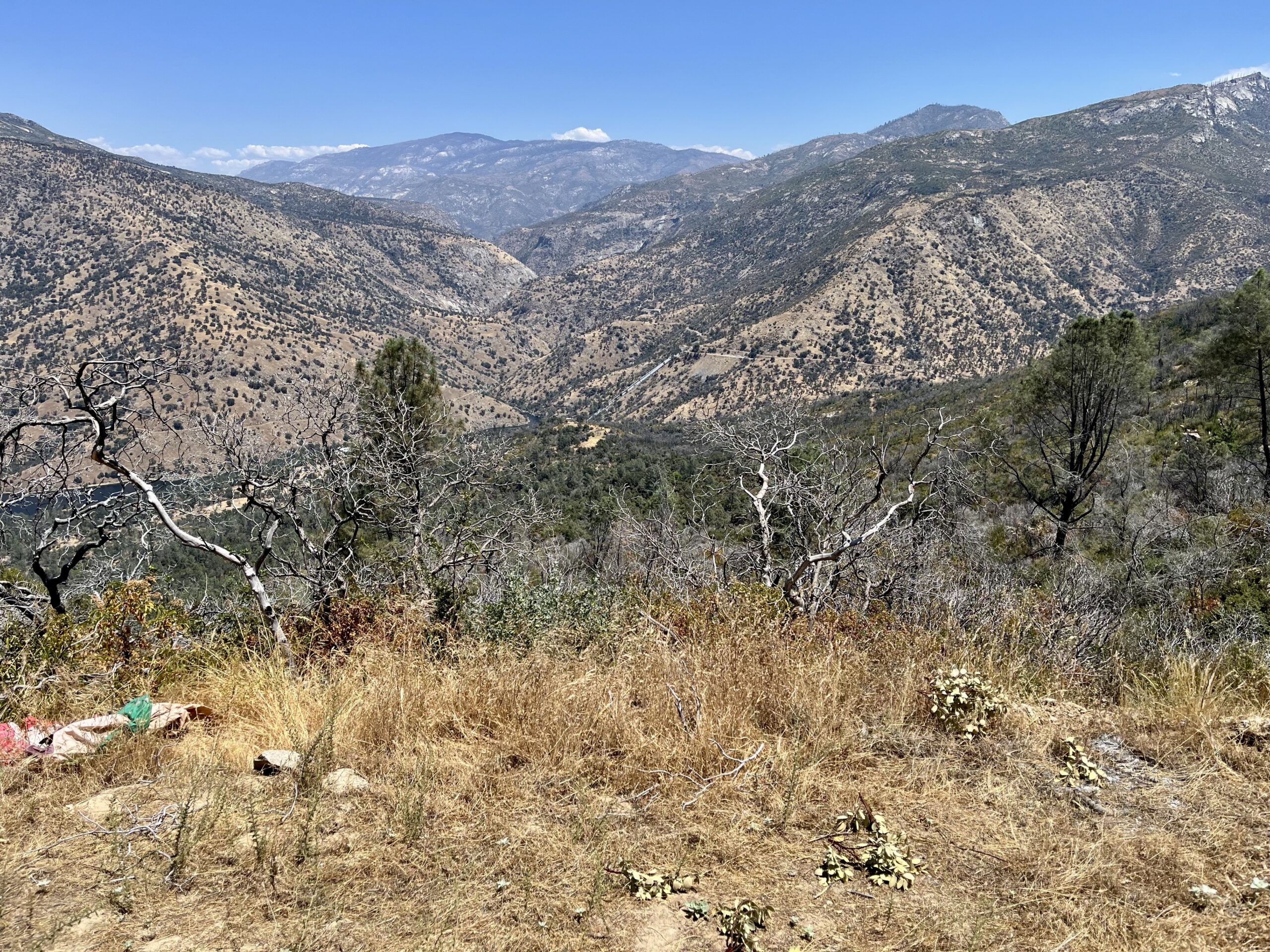
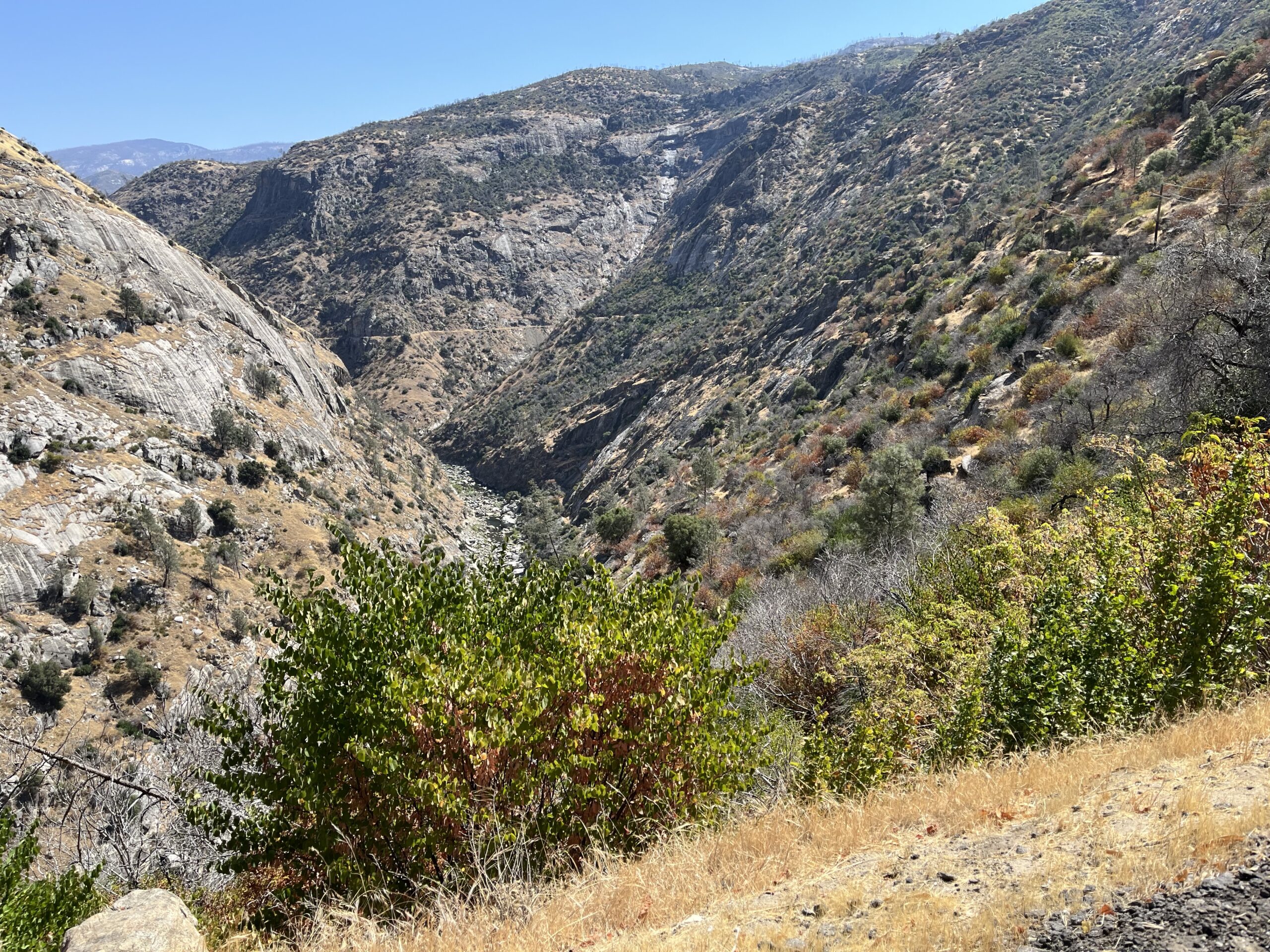
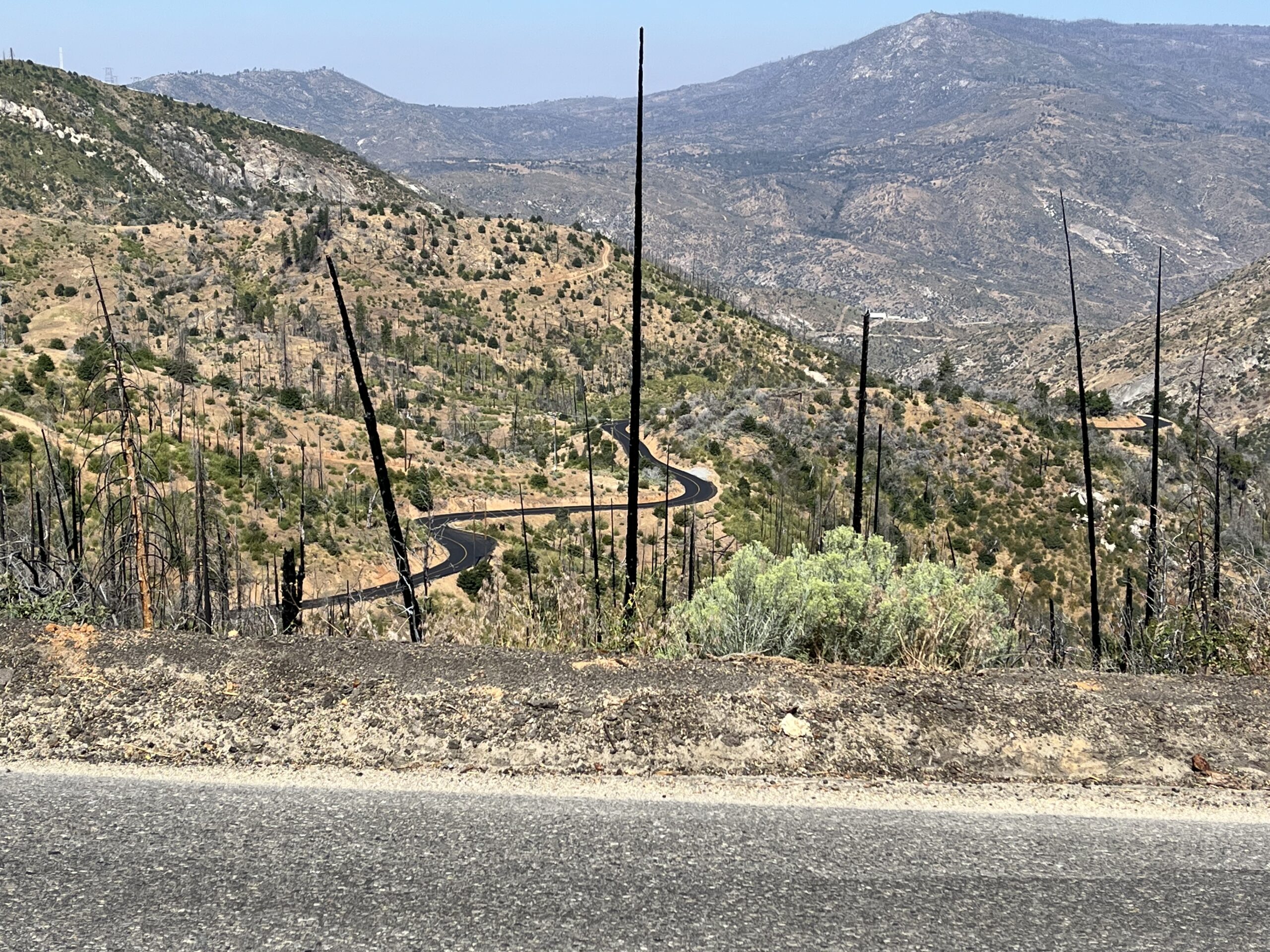
You’re in the edges of the big burn that devastated Jesus Maria Rd. (Whiskey Slide’s northern terminus) a few years ago, so about a third of the route is returning brush with views of burned-out hillsides, one third is lush, lovely oaky woods, and one third unpretentious ranch land. But I didn’t find the effects of the burn aesthetically displeasing, and, as is often the case, you get a clear view of the road ahead of you, which allows you to bomb the road with confidence.

Whiskey Slide Road

There are no services on WSR, but there are typical mountain-community general stores and mercantiles in the area—in Mountain Ranch at the southern end of WSR, at Railroad Flat up Mountain Ranch Rd. a few miles, and scattered along both Mountain Ranch Rd. and Railroad Flat Rd.

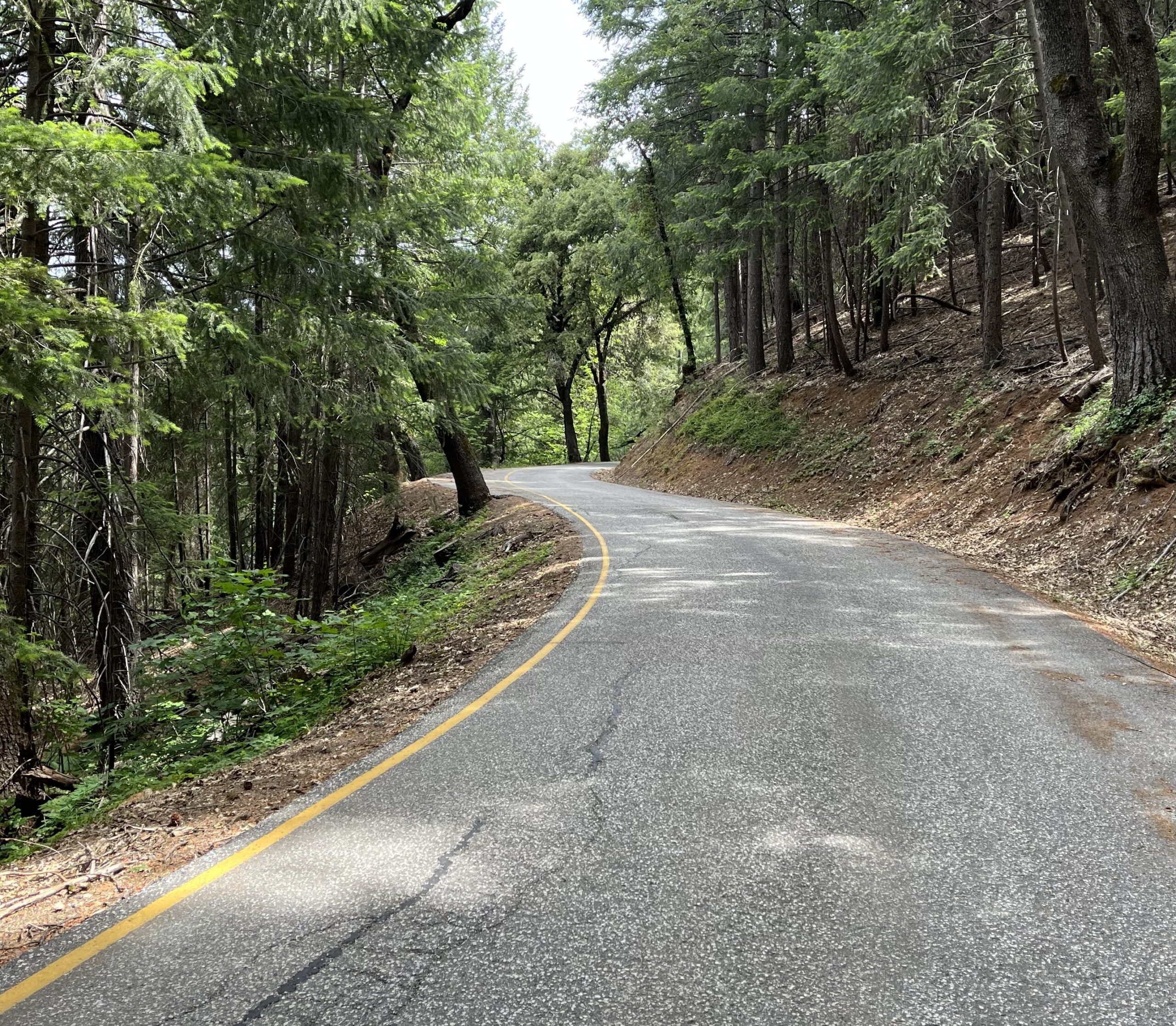
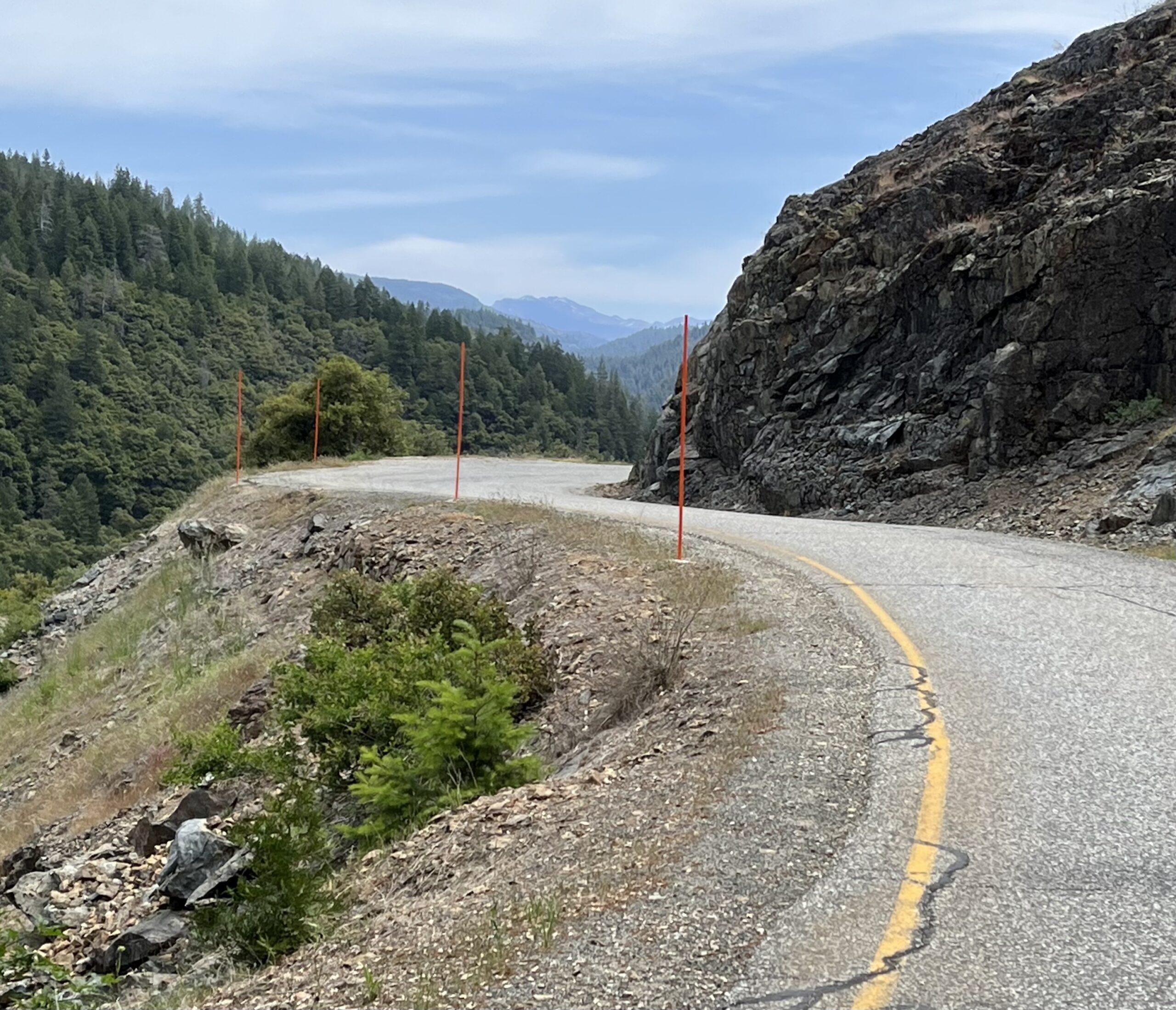
All roads in the southern Gold Country running north and south share a topography: since there is a constant stream of rivers and creeks running west out of the Sierra, all east/west roads are constantly descending to a waterway and climbing up the other side of the draw. Whiskey Slide Rd. is no exception. Whichever end you start on, you stair-step your way down to Jesus Maria Creek via delightful, whee-inducing little whoop-dee-dos, cross the creek, then stair-step you way back the back side. The climbing is fairly intense (you’ll see the occasional 10%) but always short-lived, so it never gets tedious. The road surface is flawless, the sight lines are perfect (so you don’t have to hold back for oncoming traffic), said traffic is next to non-existent anyway, and the road width is mostly a snug single lane.

E. Murray Creek Rd. takes off to the east a stone’s throw from WSR’s southern end, and it has all the virtues of WSR (isolation, great road surface, lovely scenery, constant variety) without the elevation gain or the burn. Don’t skip it.

Shortening the ride: I don’t think you’ll have to, but either half of the road can be ridden as an out-and-back to the creek. Both halves seem equally desirable.

Adding miles: WSR takes off from our Jesus Maria Rd. route and returns to it, making a short-cut that saves you a few miles. Honestly, the miles omitted by taking WSR are good but not unmissable, so there’s an argument to be made that the Jesus Maria ride is better with the WSR option.

If you’re a map-reader you’ll see that Ponderosa Way continues north from the northern terminus of WSR and you’ll hope it’s good riding, but it quickly turns to fairly unpleasant dirt.

Whiskey Slide burn

Los Alamos Road

Distance: 11.4 mile out and back
Elevation gain: 2070 ft

This is another nice climb out of a Wine Country valley, of which Bestrides has several, this time taking off from the eastern edge of Santa Rosa. Since Bestrides has a lot of these rides, I try to think in terms of what’s special about each. This one is shorter than most (5.7 mi. one way), a good bit steeper than most (way over the 100 ft/mile benchmark), and blessed with a pristine road surface (a feature it shares with Ida Clayton and Cavedale). The scenery is pretty standard Wine Country climb: open hillside with a sprinkling of oaks and houses. The traffic, as with most Wine Country dead-end climbs, is minimal. The road size begins as a wide, double yellow-lined two-lane, shrinks to a wide one-lane without centerline, then shrinks further to a true one-lane in its last mile. Vistas are minimal—brief views of Santa Rosa in the valley below and of the mountains surrounding.

All of which raises the question of why you would pick this ride over Bestride’s other Wine Valley Climbs. I can think of three reasons: 1) you want some steep. 13-15% pitch is pretty rare in this area—Los Alamos has a couple of stretches. 2: You’re in the area, and the narrowness of Cavedale and the roughness of Sonoma Mountain Rd., the other two nearby Bestrides rides, put you off. 3: You like an adventure (see the last mile of the ride description below).

Los Alamos Rd. (“the poplars” in Spanish—I didn’t notice any) takes off from Hwy 12 just south of Santa Rosa, and at first it looks like nothing but standard Greater Bay Area suburbia. Park on a side street. Soon the houses begin to thin out (though they continue to dot the hillsides). Climb on pretty, smooth, big two-lane full of sweeping curves to a major fork in the road, at which point the double-yellow stops and there’s a sign reading “Winding one-lane road” (the usual Highway Department overstatement—two cars can pass easily), and the pitch moderates. This is my favorite leg of the ride, with no houses, a nice rollercoaster road contour, and no one else on the road.

Shortly you see a prominent ranch house on the R, there’s a gate for closing off the road, a sign reads “15% grade,” and the road goes to true one-lane. The rest of the ride is only 1 mile, and it’s a trip. If you like adventure it might be the reason you’re doing the ride. You cross a small ridge top with some excellent views of the hills ahead of you to the south, then plummet down the promised 15% pitch to the end of the road at the Hood Mountain Regional Park trailhead, which is nothing more than a dirt parking lot and a parking ticket vending machine. This road is on a steep sidehill, with a wall on one side and a drop-off on the other, and you can occupy your mind with musing on just what two cars would do if they met going in opposite directions. I have no idea. I met one vehicle during my descent, and I barely had room to squeeze my bike between them and the wall. The driver graciously moved to his R about 3 inches.

Curiously, Streetview doesn’t map this last mile—it stops at the gate, which it shows as closed. Someone’s in denial.

Depending on who you are, that mile may be the highlight of the ride or something you definitely want to skip. The climb back out is tough, and there’s absolutely nothing worth seeing at the bottom. I liked it, but I like edgy.

The ride back is predictable. The first mile is a true slog, then the ride back to the double-yellow is sweet, then the descent on the double-yellow, like most Wine Country descents, varies from ripping to (for me) too-steep-to-be-much-fun. YMMV.

Shortening the ride: Turn around at the gate. You’ll only be saving 2 miles, but you’ll save a lot of effort.

Adding miles: Adobe Canyon Rd., a short, pleasant little climb, is just to the south of you on Hwy 12. A bit further down 12 are the Cavedale Rd. and Sonoma Mountain Rd. rides. Just north of you, off Calistoga Rd., is St. Helena Rd., a ride I like because I like wooly outback rides but whose road surface is too poor to make it into Bestrides. In 13 miles it will take you to the town of St. Helena, but it’s a very steep climb coming back.

Sonoma Mountain Road

Distance: 26.4-mile lollipop
Elevation gain: 2790 ft

Another climb out of a Wine Country valley, this ride takes off from Glen Ellen, one of the area’s most charming and unspoiled little villages, goes up and over a summit, does a loop around the valley to the west, and returns via the same hill.

Its advantages over the other Wine Country climbs are two: it’s more lushly wooded than they are (the terrain is primarily pretty oak forest, with a touch of redwood grove thrown in), and it’s a lollipop, not an out-and-back. Its drawbacks are two: one stretch of bad pavement and one stretch of bad traffic. In the Shortening the Ride section I’ll show you how to avoid both.

Begin in Glen Ellen. Before or after the ride, be sure to partake of the sweets at Les Pascals (literally “those born on Easter”) Patisserie on the main drag. I park at the intersection of Warm Springs Rd. and Henno Rd., a stone’s throw from downtown, where there’s a large informal dirt parking lot. Ride a mile on pretty, busy, up-and-down Warm Springs Rd. and turn L (clearly signed) onto Sonoma Mountain Rd.

Sonoma Mountain Road

Immediately begin a demanding 3-mile climb (lots of 10+%) to the summit. The road is super narrow, a true one-lane, which is fun, but the pavement is consistently poor, with patches on the patches. It’s a real bother. The foliage is at first scruffy but turns into very pretty oak woodland. Traffic is minimal, though there is a sprinkling of houses belonging to hardy souls who want to bounce up and down that hill every day.

At the summit you pass the Sonoma Mountain Zen Center and the pavement soon improves dramatically—it’s glass until you return to the Zen Center on the return ride. Enjoy the next few miles—from the start of the good pavement to Petaluma Hill Rd. is the best riding on the route.

Sonoma Mountain Road

The pitch on the west side of the mountain is milder than what you’ve just done, so the descent is a peach. Descend to clearly marked Pressley Rd. and go L on Pressley, a wide, smooth thoroughfare that is surprisingly free of traffic. After a moderate climb, do 2.5 mi. of delicious sweeping high-speed descent—a real treat. Bail out onto flat, pretty valley grape and ranch land. At the intersection with Lichee Rd. the road changes its name to Roberts Ranch Rd. (or Roberts Rd.). Continue to the dead-end at Petaluma Hill Rd. Go R onto PHR.

PHR sounds small and hilly, but it’s dead straight, dead flat and heavily trafficked. It’s no huckleberry, but it’s over in 2.5 mi. and there’s a roomy shoulder all the way.

There are some unusual houses on this mountain

Turn R onto Crane Valley Rd., which becomes Grange Rd. somewhere. CVR is a large, sanitary two-lane, and you think it’s going to be more flat, but it includes a 1-mile climb that is unexpectedly steep (some 9-11%). It’s all shoulder riding, with considerable traffic. Not particularly fun.

CVR dead-ends at Bennett Valley Rd. Go R onto BVR. Shortly you see Sonoma Valley Rd. going off to the R—take it back to Pressley. This leg is slightly up on a pleasant, cultivated two-lane with houses and little traffic. At Pressley, retrace your steps back to your car. The climb up from there to the summit is shallower and the pavement is worlds better than the one you did coming out, so it’s quite nice.

The only redwoods on the route

At the intersection of Bennett Valley Rd. and Sonoma Mountain Rd. you have options. If you’re done with climbing, want to shave some miles, or want to avoid a steep descent on crappy pavement, continue on Bennett Valley Rd. back to Warm Springs Rd., and take WSR back to your car. BVR, as the name implies, runs straight through Bennet Valley, which is renowned for its cultivated beauty. It’s a steady dose of picturesque horse farms, oak canopies, mild ups and downs…pretty ideal riding, were it not for the traffic, which is fairly constant. The shoulder varies from generous to non-existent. There often isn’t much room, but the drivers seem tolerant and straight passing stretches are frequent. I didn’t feel threatened. Warm Springs Rd. is more of the same: flattish, very pretty, trafficky.

Shortening the ride: since the best riding is the west side of Sonoma Mountain and Pressley Rd./Roberts Ranch Rd., you can do them both as an out-and-back: start at the Roberts Ranch Rd./Petaluma Hill Rd. intersection, ride Roberts Ranch > Pressley > the summit of Sonoma Mountain Rd. and return. I promise you, you won’t be missing anything wonderful by skipping the rest of the route.

Adding Miles: Glen Ellen sits on the Trinity Grade loop version of our Cavedale ride, so you can easily add on Cavedale, which would make for a hefty day’s climbing. For a less demanding addition, ride the 5.5 miles of Hwy 12 up to Adobe Canyon Rd. and ride its 4 pretty miles (one way) up to Sugarloaf Ridge State Park and the observatory (1 mile of serious climbing). An unexpected treasure is Lawndale Rd. + Schultz Rd., all 3.5 miles of it, just 1.5 pleasant miles down Warm Springs Rd. from the intersection of WSR and Bennet Valley Rd. See details in the Adding Miles section of the Cavedale Rd. post.

Atlas Peak Road

Distance: 18.2 out and back
Elevation gain: 2350 ft

This is yet another sweet climb out of a Wine Country valley, this time out of the city of Napa. It’s a dead end, and it absolutely can’t be looped. It’s much like our other Wine Country climbs, but its road surface is better than some (about 60% of it is glass), and the landscape is manicured…that is to say, it looks as if a professional gardener was maintaining it. So it’s very attractive and very clean. For much of its length it’s got a sparkling clean center line and sparkling clean fog lines—even a bike lane in the beginning—and the pretty oaks that line much of it look meticulously pruned. Fairly elaborate homes and vineyards dot the landscape. There is no sense of being in the outback or escaping civilization. So it’s prettier than our other area rides, but also more domesticated.

This isn’t a great ride for vistas—at the very top you can see north and east for some distance over barren, rolling hills, but until then, not much.

The workload is roughly the same as our other Wine Valley climbs, with all the hard stuff in the first and last thirds, the middle third being close to flat. There are some short 10-12% swells.

The road narrows near the top

Though the area is more built-up than our other area rides, I still found next to no traffic—4 vehicles in 9 miles on the ride in. The route has many signs asking drivers to share the road, which usually is a sign of traffic, so maybe I just got lucky.

The first mile of so of Atlas Peak Rd. is big and busy and thoroughly uninviting. I skip it and park in one of the shoulder turn-outs by the Silverado Resort or the golf course, where parking is surprisingly easy. As you ascend, the road gets slowly narrower, less populated, and wilder, until finally you’re on a true one-lane road (I met a Fed Ex truck and it filled the road—I had to pull off) surrounded by open spaces and little home-spun vineyards. Halfway up the road surface, which has been glass, begins to break up, and it gets worse over the next 2.5 miles, then thankfully returns to glass for the remainder of the climb.

Look at that road surface!

The road ends at a turn-around and a large gate that reads “Atlas Peak Ranch.” In case you’re in any doubt there is a sign reading simply “END.”

The descent varies from good to excellent, with the exception of the near-flat rough patch in the middle, which I just waited out.

Most of the estates along the route are set well back from the road, and many of them are reached by long, meandering side roads that are little more than paved trails. It looked like they would be fun to explore on a bike, but I didn’t try it.

As good as the vistas at the top of the ride get

Shortening the ride: There is no need, and I think the riding gets better the further you climb.

Adding miles: Our Mt. Veeder Rd. ride is on the other side of town.

Ida Clayton Road

Distance: 15.6 out and back
Elevation gain: 2490 ft

(A Best of the Best descent)

This is another of those pure climbs out of the Wine Country valley floor. Bestrides has four of them: Pine Flat Road, Geysers Road, Cavedale Road, and this one. They are all peachy, they all climb through similar, moderately pretty scrub much of the time, and they’re all fairly long, hard climbs without being brutal (7-10%). Obviously I like them all. How to know which one to ride first? Here are some distinguishing features:

Geysers is the only loop among the four (though Cavedale and Ida Clayton can be made into one). Geysers and the loop version of Cavedale are the only two to include sweet flat valley riding. Geysers has a more varied contour than the others. Much of its road surface is rough, but readers tell me it’s been partially improved recently. It’s by far the longest, so it has by far the shallowest (easiest) climbing.

Pine Flat has the steepest pitches and has a nice flat break in the middle of the climb (the eponymous Pine Flat). It can’t be looped.

Cavedale and Ida Clayton have both been repaved recently and have glassy surfaces.

Cavedale goes up to a summit and down the back side, so you get a super-sweet roller coaster between the summit and the turn-around that is one of my favorite legs in the Wine Country.

Ida Clayton climbs steadily for 4 mi., then rolls and climbs mildly for another 4 mi. through beautiful woods on a road surface that ranges from OK to terrible. I think Ida Clayton’s descent is the best of the four.

Which one is the hardest? Here’s a quick look at the stats (very approximate) on the climbing segments only for the four rides:

Geysers: 22 miles, c. 180 ft/mile
Pine Flat Road: 10.6 miles, c. 340 ft/mile
Cavedale: 5.1 miles, c. 530 ft/mile
Ida Clayton: 4 mi, c. 620 ft/mile

As you can see, the shorter the ride the steeper the gradient. And sometimes averages lie—Pine Flat Rd. has some genuinely frightful pitches the others lack.

All four rides share the virtue of isolation: there’s really little reason for a car to be on any of them. Because Ida Clayton goes from Hwy 128 to Middletown, as does the much more car-friendly Hwy 29, you can expect exceptionally car-free riding. When I rode it, on the 8-mile ride in I met 0 vehicles. On the ride out I met two.

Ida Clayton Rd. heads straight up from Kellogg, an invisible community on Hwy 128, the highway that runs through St. Helena and Calistoga—think of it as a few miles north of Calistoga. This being flat agricultural land, there is roadside parking everywhere. The road climbs robustly and steadily, but never ferociously (nothing prolonged over 10%), for 4 miles, at first through pretty woods and then through typical Wine Country hillside scrub—not gorgeous but handsome in its way. The road is posted as “one-lane,” and it’s without shoulder, fog line, or center line, but it’s wide enough for two cars to pass, cautiously, and wide enough that the descent on the return is a pleasure. The road surface, recently redone, is flawless for the first 4 miles, then not so. The pitch is fairly constant but the road is rarely straight and there is a lot of variety in the curves. As you ascend, you start to get those grand vistas of Calistoga’s valley below.

Four miles in you hit a mini-summit and the ride changes completely. From now on you’re in pretty deciduous trees, the road contour wanders up and down easily, mostly up (there’s a noticeable pitch in the last 0.8 miles), and that glassy road surface soon turns into old, broken pavement that is at times really wretched. It’s more like mountain biking. Go for the scenery, or turn around at the mini-summit.

Looking back at the climb and Calistoga’s valley–click to enlarge

Eight miles in the road turns to dirt. If you continue, in 2.2 miles the pavement returns and in 3 total miles you emerge onto Hwy 29 at the southern outskirts of Middletown, from whence you can easily bop over to Harbin Hot Springs for a soak, then return to Kellogg via major connector Hwy 29. Hwy 29 is a steep, very trafficky, curvy deathtrap for bikes (despite the bicycle icons painted on the road surface and the “share the road” signs). I wouldn’t dream of riding it, but obviously some cyclists do. For other loop options see Adding Miles below. But if you loop the ride you’ll miss the Ida Clayton descent.

The climbs on Cavedale and Ida Clayton are almost indistinguishable, and the descent on Cavedale is iffy, so the descent on Ida Clayton should be equally iffy, but it isn’t. I guess the slight increase in road width makes all the difference, because this descent you can really carve. Hence the Best of the Best rating.

Shortening the ride: Ride to the mini-summit and turn around.

Adding miles: Our Pine Flat Rd. ride is 9 flat, rideable miles north on Hwy 128. The southern edge of our Geysers Rd. ride is a stone’s throw north of PFR.

If you want a loop route, are turned off by the traffic on Hwy 29, and are up for some miles, you can ride to the end of Ida Clayton, ride through Middletown, and take Butts Canyon Rd. to Pope Valley Rd. through Angwin, Deer Park, and Calistoga back to Kellogg (thanks, Brian). All very good riding, c. 56 miles.

If you want to ride alongside the vineyards on the valley floor, at the bottom of Ida Clayton you’re near the northern end of the Napa Valley Vine Trail, a bike trail that stretches (with gaps—it’s a work in progress) from Napa to Calistoga, usually within sight of the highway. The leg from St. Helena to Calistoga is brand new (as of 1/25) and particularly sweet.

Directly on the opposite side of Hwy 128 from the base of Ida Clayton is Franz Valley Rd., which introduces you to a delightful warren of pretty, largely flat roads—Franz Valley Rd., Franz Valley School Rd., Petrified Forest Rd., and all the others between Hwy 128 and Santa Rosa to the west. Feel free to wander. For more details, see the Adding Miles section of the Pine Flat Road post.

Above the mini-summit: pretty trees, lousy road surface

Tioga Pass

Distance: 24 miles out and back
Elevation gain: 3110 ft

As with all the rides in Bestrides situated along Hwy 395, I encourage you to read the “Eastern Sierra” section of our By Regions page, to put this ride in context.

This ride goes from Lee Vining on Hwy 395 to Tioga Pass via Hwy 120—from east to west, in other words. You can of course ride to the pass from the west (from Yosemite), and it’s worth doing, but it’s a much longer and less dramatic ride. The west side has Tanaya Lake, and there’s nothing to match it for beauty on our route, but I still prefer this way.

Like a lot of the rides on Hwy 395, this is a steady, long, fairly straight climb up through a dramatic rocky canyon. The climbing is essentially without interruption. It’s never killer steep, but it’s seriously moderate in pitch, and as always in this region the altitude (the pass is at 9940 ft.) makes the climbing one or two quantum leaps harder than you expect. The road is a popular route through the Sierra, so you can expect some traffic unless you’re off-season, but the upside to that is the road surface is nearly pristine—a rarity in this region of frost heaves and expansion cracks..

This is one of my favorite rides in the area, for two reasons: 1) The vista looking west from the top of the big climb (just before Ellery Lake) is jaw-dropping—you can see the 10 miles of road beneath you, snaking its way along the canyon wall (see the photo below, but it doesn’t do it justice); and 2) the road surface is good, so the return ride is a descent you can really rip—40 mph+ is a cinch. It’s not a slalom, it’s a plummet, but I still think it’s the second-best descent in the area, after Hwy 168 (in the Bristlecone Forest ride). Besides those two virtues, the ride is pretty much generic 395 stuff. The two lakes you ride by are pretty but not breath-taking. At the pass there is nothing but a small ranger kiosk taking money from the cars heading for Yosemite—I rode right through it and only knew to turn around when I noticed the road was trending steadily downhill.

As with all riding in the 395 corridor, weather matters. This road closes in winter (typically November till Memorial Day), and any late-fall or early-spring riding can run into road ice. I rode it in mid-November during a period of clear weather, and there were a few patches of ice on the road and the lakes were largely iced over. Dress for cold—when it’s a warm fall day in Lee Vining it can be in the 50’s at the top, and you’re going to be going fast on the descent.

Park in the dirt parking lot across from the legendary Whoa Nellie Deli. Before or after the ride, take the time to check out this local icon. The food at the deli is reputed to be gourmet in quality, but I’ve never found it so. Still, the place has a fun vibe.

Looking back down the road from Ellery Lake—click on it to appreciate

Ride up Hwy 120 to Tioga Pass. Turn around and ride home. That’s it. You’ll pass two lakes, Ellery and Tioga. When you get to Ellery, the hard climbing is over.

Shortening the ride: Ride to Ellery Lake and turn around.

Tioga Lake

Adding miles: Continue past Tioga Pass as far as you want. Remember you have to climb back up. It’s 57 miles from the pass to the outskirts of Yosemite Valley, but there are several meaningful spots to turn around along the way, as Ben below points out: Tuolumne Meadows, Tanaya Lake, Olmstead Point.

I don’t know of any other worthwhile riding within riding distance. Virginia Lakes Rd. (discussed in the Rides by Region discussion of the Hwy 395 area) is a short drive to the north. Our June Lakes Loop ride is a short drive to the south.

Squaw Valley Road

Distance: 18.3 out and back
Elevation gain: 1680 ft

This ride is nowhere near the old Squaw Valley skiing area.

This is a fairly generic ride—pleasant rolling along a wide, well-surfaced two-lane road past a long grassy meadow, then up and over a noticeable hill through nice, unremarkable Norcal forest. Well worth doing if you’re in the area, not worth driving out of your way to do. It has two selling points: it’s only 8 miles off Hwy 5, so it makes for a nice break in the drive if you’re traveling between Oregon and lower California, and it has one striking vista, of Mt. Shasta looming over the meadow (see photos below). It’s a short ride with a moderate work load (3 miles of moderate climbing), but you can keep riding beyond our turn-around point if you want more miles (see Adding Miles).

Drive to the small town of McCloud and park on Squaw Valley Rd., a road whose name is surely not long for this world. This being a real rural small town, there is plenty of dirt shoulder. Ride 9.1 miles to Lake McCloud; return.

The first 5 miles are along a long, pretty meadow that was still mostly green when I rode it in mid-August. The road is basically straight and imperceptibly downhill, so it’s an easy warm-up.

Basic normal forest

When the meadow ends, you enter solld Norcal forest and you do the one hill, 1.5 miles at a noticeable pitch (6-8%), then a nice 1.5-mile descent (again, 6-8%) to the lake.

Typically in a ride to a lake the lake itself is the high point, but Lake McCloud is the ugliest lake I’ve ever seen, so arriving there isn’t uplifting.

At the lake the road forks, and each fork follows one of the lake’s shorelines. The L fork (east side of the lake) immediately turns to well-maintained dirt and is blocked by a gate and a sign reading “road closed.” I didn’t ride it but it looks inviting, for dirt. The R fork (west side of the lake) remains paved and immediately climbs for a mile, then returns to the lake shore. I did a couple of miles, none of it remarkable, and turned around. I got no views of the lake, but you wouldn’t want them anyway. According to street view the road continues to the southern end of the lake on sketchy pavement, then crosses the dam and rejoins the east-shore dirt road, which continues south for miles and connects to an endless warren of other dirt roads.

The meadow, with Mt. Shasta behind

The ride back to McCloud is as you would expect—1.5 miles of moderate climbing, 1.5 miles of nice descending, then an imperceptible climb along the meadow—with one lovely surprise: When you get to the meadow you see that, unbeknownst to you on the ride out, Mt. Shasta has been dramatically dominating the skyline to the north. Enjoy the view and return to your car. By the way, halfway down the descent on the return ride is the mother of all cattle guards, which you’ll hit at 35 mph if you don’t see it coming, which you don’t want to do.

Shortening the ride: for a completely effortless outing, ride to the end of the meadow and turn around.

Adding miles: Ride to the dam at the southern end of the lake (4.3 miles from the turn-around one way, 1 mile of climbing) . Add as much of the dirt road continuing south as you wish. It’s all pretty much the same.

Kelsey Creek Road Loop

Distance: 13-mile lollipop
Elevation gain: 785 ft

This isn’t a life-changing ride—just a sweet little lollipop with a varied contour through nice Clear Lake woods, past a lot of unpretentious ranches, and (briefly) along a charming creek. I’d be more enthusiastic if the road surface were better—it’s only OK, but a very worthy little hour’s outing nonetheless. The elevation total is mild, but the ride is mostly rollers and you’ll have the chance to work some. It’s nowhere near as swell as our Clear Lake to Cobb ride, which is just down the road, so do that one first, then this, unless you’re trying to avoid climbing.

Start at the intersection of Kelsey Creek Rd. an Hwy 29. There’s dirt shoulder parking.

A short stretch into the ride you’ll see Wight Rd. prominently forking off to the R. Don’t take it but note it. Our loop ends there.

Kelsey Creek Road

At some point in the ride the road changes its name to Adobe Creek Rd.

Turn R onto Wight Rd. and ride Wight back to the Wight/KCR intersection. Return to your car on KCR.

There are at least two ways to make the ride longer by enlarging the loop: instead of turning on Wight, continue north and turn R on Bell Hill Rd. or (still further) Merritt Rd. Both routes have substantially less interesting road contour/scenery and I don’t recommend them.

Adobe Creek Road

Shortening the ride: Not much need to, but the best miles are the loop, so you could start at the Kelsey Creek Rd./Wight Rd. intersection.

Adding miles: From our starting point it’s about 4 miles of flat to Clear Lake State Park, a lovely park and campground where you can pick up Soda Bay Rd., a pleasant 9-mi. (one-way) stroll along the lake shore and through some classic old Clear Lake settlements to an intersection with Hwy 29.

Noyo Headlands Coastal Trail

Distance: 13.5-mile out and back
Elevation gain: 460 ft

This is possibly the easiest, most low-key ride in Bestrides. It’s short and essentially flat. It’s a haven for casual riders on rental cruisers, and the population of walkers and their dogs on leashes is high.

So why is it in Bestrides? Because it’s the only place I know of where you can ride your bike on a paved trail along the magnificent Northern California headlands and watch the waves crashing against the seastacks below you, the harbor seals basking on the rocks, the pelicans heading in single file to their mysterious destinations to the south or north, and the seagulls wheeling overhead. It’s more a meditation than a ride, and I love it. In addition to the natural wonders of sea and headland, the ride offers a grand old wooden railroad trestle, a world-famous bridge across the Noyo River, a postcard-perfect beach and wooden boardwalk across marshes to Seal Rock (both in MacKerricher State Park), a second beach composed of glass pebbles, a marine biology interpretive center, enough informational placards scattered along the path to satiate the most info-hungry among us, and Fort Bragg’s state-of-the-art water treatment plant.

It’s a mere 13.5 miles, but you can’t ride it fast (too many walkers), and you want to enjoy the ambiance, so it’s a solid one-hour ride.

This ride traverses the shoreline just to the west of Fort Bragg. In past years the riding here consisted solely of the Old Haul Road, a rail-to-trail conversion that ran from about a mile north of MacKerricher State Park a few miles north of town southward until it crossed the grand trestle spanning Pudding Creek at the north edge of town. It was a mostly straight, fairly boring ride on poor pavement, worth doing once for Mackerricher itself and the simple joy of being on a bike by the sea. But in recent years the massive lumber mill complex that occupied the entire west side of the town, everything between Hwy 1 and the sea, was torn down and carted away, the land was turned into Noyo Headlands Park, and our lovely trail was cut along the lip of the cliff from the south end of town to the north and connecting to the Old Haul Road.

The trail itself isn’t all eye candy. Much of the time you’re riding through open grassland, with the good stuff—the lip of the cliff and the crashing waves below—out of sight a short distance to the west. But the trail has a nice meandering contour, and it’s usually only a matter of hiking (or illegally riding) 30 ft off the trail to get those matchless vistas.

The main southern trailhead, with bathrooms and maps, is at the west end of Cypress St., but you don’t want to start there. Instead, drive to Pomo Bluffs Park on the south side of Noyo Bay. This allows you to ride the leg of the trail along the south side of the Bay and cross the Noyo River Bridge. The road surface here is a little rough, but the views of the bay are great (you can see the trail continuing on the northern shore), the informational placards are interesting, and you’ll have the trail to yourself. Be sure to read the placard detailing the history of bridges over the river (there have been several) and the multiple awards the current bridge has won.

Pomo Bluffs Park, looking across Noyo Bay to the next leg of our trail

Cross the Noyo River Bridge on the clean and comfy separated bike lane and immediately pick up the trail (unsigned, but it looks just like a trail, with a bollard and a “mi. 0” painted on the pavement) at the north end—oddly, the mileage markers seem to go to 1/2 mi. and stop). Btw if you’re riding the trail backwards, picking up the trail at the south end of the bridge is challenging. It begins in the parking lot for the Noyo River Grill and wraps tightly around the back side of the restaurant. The trail entrance is small and looks like a back entrance to a trailer park.

Back on our mapped route, ride to the southern trail head parking lot, where there are bathrooms and a large map of the Noyo Headlands Park area informing you that you are on the Ka Kahleh Trail. The Pomo Indians were centrally involved in the development of the area, and you’ll see their influence throughout the ride—most notably on a harrowing trailside placard detailing the awful treatment they received at the hands of the white settlers.

On the otherwise-impeccable map, the trail is shown to have a large gap in its center. This seems to be old news—the trail is now flawless pavement all the way to Glass Beach.

Trailside scenery is a bit bland away from the water

The bathrooms sit at the southern end of the old sawmill airplane runway, unmissable and open to cars and bikes if you’re of a mind to do some dead flat, dead straight riding. Take a moment to imagine what it must have been like to land a plane alongside the cliffs on one of those typical Fort Bragg days with heavy fog or strong crosswinds.

Immediately past the bathrooms is a grand sinkhole on your L, Skip’s Punchbowl. For the best views, get off your bike and walk around it.

Halfway down the trail you encounter the Noyo Center for Marine Science’s Crow’s Nest Interpretive Center, complete with exhibits, tours, and a 73-ft whale carcass made from dirt. Well worth a stop.

At the northern end of the trail you pass the steps to Glass Beach, a local mecca. The beach was used as a dump for glass bottles for decades. The surge smashed the bottles and wore the shards down to smooth beads. Worth a visit if you like colored glass. You’re asked not to remove samples.

At the northern end of the trail you pass the Glass Beach parking lot. At its eastern end (by the bathrooms), take the bike path north to the Pudding Creek Trestle and cross it.

From the Coastal Trail looking back at the Noyo Harbor entrance and the Noyo River Bridge

From here to MacKerricher State Park you’re on the Old Haul Road. It’s straight- er, rougher of road surface, and much less scenic than what you’ve already ridden, and if you want to turn around so be it, but I encourage you to persist, because the OHR takes you to MacKerricher, which is a lovely spot. Once there, gaze at or walk on the pristine beach and walk the wooden boardwalk out to Seal Rock for a grand view of the coastline. The park is free to everyone—when the MacKerricher family gave the land to the State they mandated that no one would ever have to pay.

The trail debouches on to the MacKerricher main road, and you’d think it was over, but there’s more. Ride north 100 yds on the road and pick the trail up again. It continues north amidst the sand dunes for a mere 1.2 miles (clearly marked on our map as MacKerricher State Park Road, but not included in my route map), at which point it ends at a nice overlook of 10 Mile Beach and the stretch of California coast to the north. It’s short but it’s worth doing for its proximity to the beach and the (relative) solitude.

Retrace your steps.

Shortening the ride: Hard to imagine wanting to, but the plumb miles are clearly those between the sinkhole and Glass Beach.

Adding miles: A sweet little loop that actually touches our route is

https://ridewithgps.com/routes/44232514

I know of no other good riding in Fort Bragg proper. Our Mendocino Coastal ride is 15 minutes to the south in Mendocino. See the Adding Miles notes of the Mendocino/Comptche ride for good riding further afield.

Hwy 1 north of Fort Bragg from town to Ten Mile Beach is a particularly beautiful stretch of Hwy 1, but it’s very trafficky and without shoulder.

South Round Valley Road

Distance: 12.6-mile out and back
Elevation gain: 425 ft

As with all the rides in Bestrides situated along Hwy 395, I encourage you to read the “Eastern Sierra” section of our By Regions page, to put this ride in context.

This is not a great or thrilling ride, but it’s perfectly pleasant, a short, flat stroll through the Owens Valley fields with nice Sierra mountains as a backdrop to the west. I include it because our Eastern Sierra riding is short on recovery-day rides, and this is an ideal one. If you want to add on to it, there are two harder rides at its turn-around point (see Adding Rides below).

Turn off Hwy 395 onto Saw Mill Rd.—yes, to my surprise, if you’re coming from the south you can cross the divided highway. Park in the large dirt parking lot at the intersection of South Round Valley Rd. and Saw Mill. Ride SRVR to its intersection with Pine Creek Rd. Return. Other than the prison you pass, there’s not much to talk about.

Shortening the ride: Not imaginable.

Adding Miles: Your turn-around point is on Pine Creek Rd., which is one of the better climbs in our By Regions list of area rides if you go left. If you go right on PCR, in a stone’s throw you hit the southern terminus of Rock Creek Rd., also in By Regions. Either will satisfy any climbing jones you may be having. If you want more easy riding, cross Pine Creek Rd. and continue on North Round Valley Rd., which will about double your mileage—see Robert’s comment below for details.